Tariffs and the Domestic-vs-Overseas Manufacturing Math in 2026
The September 2026 tariff stack on imports, a landed-cost formula, two worked examples, and a checklist for when domestic manufacturing wins outright.
14 min read
By Reid Abrams, Founder & CEO · Mechanical Engineer
An estimated 80% of a product's final cost is determined during the initial design phase. Yet, for many product teams, manufacturing is treated as a downstream concern.
This disconnect is the most common source of catastrophic budget overruns. It's the sinking feeling of a “finished” design being rejected by the manufacturer, forcing expensive redesigns and retooling. It's the production delays and excessive scrap rates that turn a brilliant concept into a failed project. This is where Design for Manufacturability (DFM) becomes the critical bridge between idea and execution. At RMA Engineering, we position DFM at the center of our comprehensive three-phase approach. We seamlessly connect our design, prototyping, and large-scale manufacturing services to ensure your product is optimized for production from the very first sketch. Our goal is to move you beyond simple prototyping and into a profitable partnership that guides your product from concept to market.
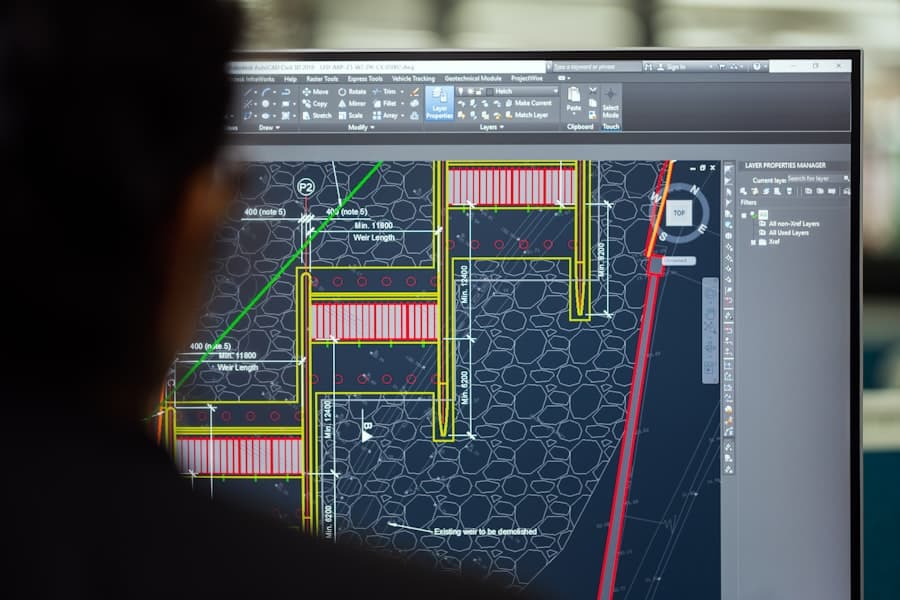

The most immediate and impactful DFM principle is simplification. Every part in an assembly requires material, fabrication time, tooling, inventory management, and assembly labor. By minimizing the total number of components, you directly reduce complexity and cost.
DFM Impact: Reducing your part count by 20% can lower your assembly time and inventory management costs by an even greater margin, dramatically improving your margin as you scale production.

Not ready to talk?
Get the free Inventor's Guide — a walkthrough of how to take an idea from concept to finished product.
Your choice of material must satisfy performance requirements, but in a DFM context, it must also satisfy the requirements of the manufacturing process and the supply chain. A design featuring an exotic, hard-to-source alloy is inherently less manufacturable than one using a standard-grade plastic or metal, even if the material performance is marginally better.
In engineering, a tight tolerance means a dimension must be held to a very small deviation (e.g., ±0.001 inch). While often necessary for mating parts or precision components, specifying tighter tolerances than functionally required is a massive waste of production budget.
Good DFM means designing into the specific process you intend to use. Whether you are using CNC, stamping, casting, or injection molding, each technology has a unique set of best practices that dictate geometry.
Our process documentation emphasizes how the design, prototyping, and manufacturing phases integrate seamlessly. This integrated approach prevents the common pitfall of a design being rejected by the manufacturer because it was never optimized for their specific equipment or process.

A product is only manufacturable if the final output can be reliably and cost-effectively verified. Design for Testability (DFT) is a core DFM requirement that ensures your product can be efficiently inspected and tested before it ships.
Design for Manufacturability (DFM) is not an afterthought; it is the core link that turns an idea into a scalable, high-margin product. By proactively addressing these five considerations, you transition your focus from if a product can be made to how efficiently it can be made.
If your current digital presence positions you as primarily a 3D printing or prototyping service provider, you are missing the opportunity to capture high-value, comprehensive development projects.
RMA Engineering is a comprehensive product development partner, guiding clients through concept-to-market solutions. We integrate DFM expertise into our core design services to ensure the final product is not only ready for our manufacturing services but also ready for market success.
Ready to ensure your next product launch is cost-effective and scalable? Schedule a comprehensive development consultation today to ensure your project alignment is correct from concept to market.
The September 2026 tariff stack on imports, a landed-cost formula, two worked examples, and a checklist for when domestic manufacturing wins outright.
What an injection mold costs in 2026 ($5,000–50,000), why the minimum order is 1,000+, how unit price falls with quantity, and who owns the mold.
Overseas or domestic manufacturing for your startup? Costs, MOQs, lead times, quality, IP, and tariffs compared, with worked landed-cost examples.
Book a Free 30-Minute Design Review with the RMA Engineering team, or grab the free Inventor's Guide to explore at your own pace.
Or start smaller: run your idea through the free Reality Check →